Periosteum
What it means
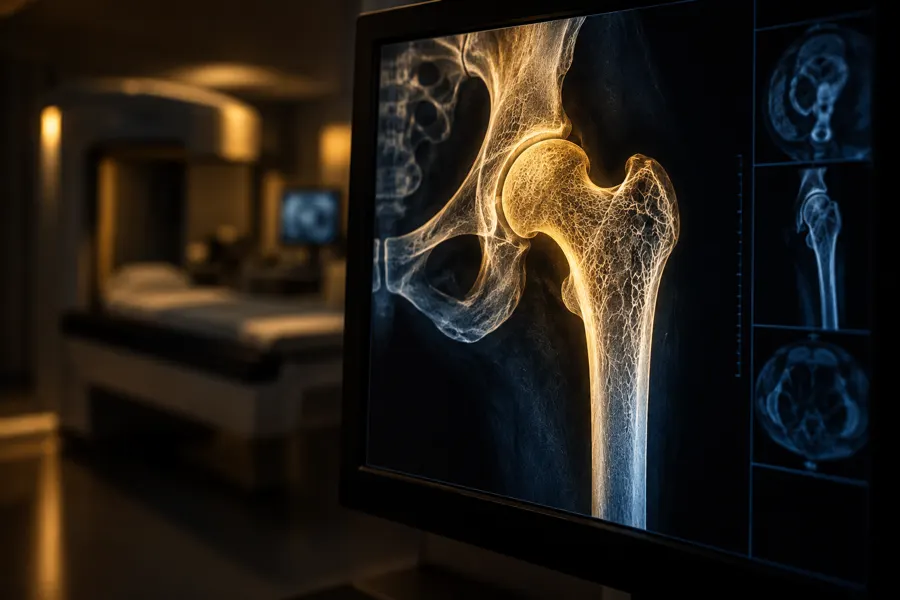
The periosteum is the thin membrane that covers the outside of your bones, carrying blood vessels and nerves into the bone.
Because the periosteum is full of nerves, injuries like fractures to this layer are a major reason bones hurt, and it may help bone respond to the forces placed on it.
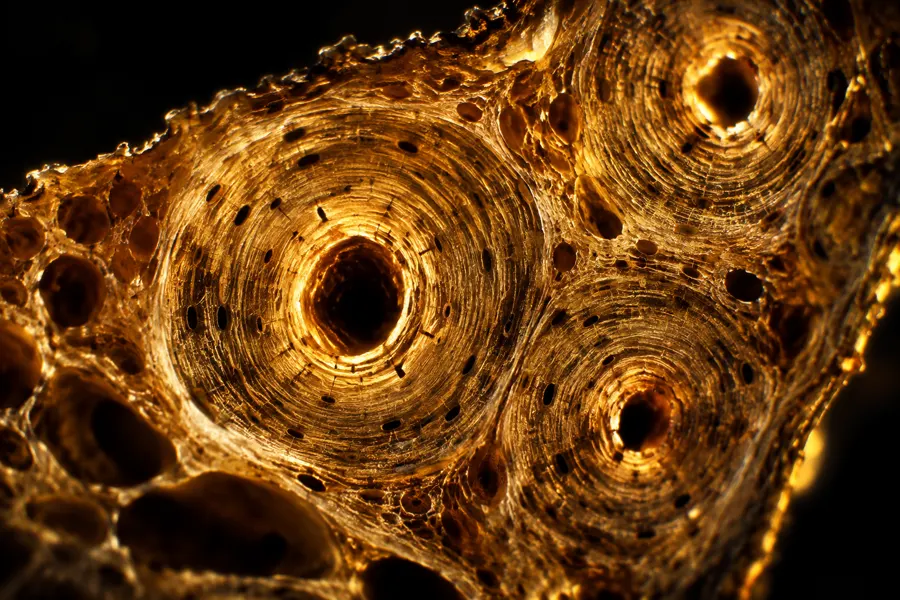
The periosteum is the outer covering wrapped around your bones. It's not just a passive wrapper — it's where blood vessels and sensory nerve fibers enter the bone, running alongside the vessels into the marrow and even into the mineralized bone tissue itself.
Because the periosteum is so richly supplied with nerves, bone is actually an innervated tissue. This explains why a fracture is so painful — the nerve fibers in the periosteum and deeper bone layers register the damage. These nerves aren't just for sensing pain, though.
Research suggests these same nerves may also help regulate bone metabolism and could play a role in how bone responds to the loading it experiences, connecting the nervous system to the ongoing process of bone maintenance.
How sure is this?
Graded Established Science: Supported by broad scientific consensus and decades of research. Read each study with its grade in mind. One study is a piece of the picture, not the whole of it.
The periosteum's nerves explain why fractures hurt and may help bone respond to force.
Where this leads
 Word
WordThe periosteum senses force placed on bone, so how does that force actually become a signal inside the bone? This explains that sensing process.

Where the Academy teaches it
This page is the short version. The lessons teach it in full, with the context around it and a quiz to lock it in.
Related words
Cortical bone is the dense, hard outer layer of bone that forms a protective shell and resists bending and twisting…
Bone remodeling is the lifelong cycle where cells called osteoclasts remove old bone and osteoblasts build new bone…
Osteogenic loading means applying brief, high, muscle-generated force to your skeleton in a way that's strong enough…
Bone marrow is the soft tissue inside bones where red bone marrow makes your red blood cells, white blood cells, and…
Mechanotransduction is how bone cells sense physical force and turn it into chemical signals that tell bone to adapt.
The endosteum is the thin layer of cells lining the inner surface of bone, next to the marrow cavity.
The periosteal surface is the outer edge of a bone, right where it meets the surrounding soft tissue and is covered…
The bone cortex is the hard, dense outer layer of bone that gives it strength and shape.
Education only, not medical advice. Decisions about tests, medications and treatment belong with your own doctor. OsteoStrong does not diagnose, treat or cure any disease.