
Bed rest bone loss
Also called: bed rest
What it means
Bed rest bone loss is the rapid loss of bone density that happens when someone lies flat or stays immobile for weeks, because the skeleton isn't getting its normal mechanical signals to maintain itself.
If you ever face extended bed rest from illness or surgery, knowing this helps explain why staying as mobile as safely possible matters for your bones.
Bed rest bone loss happens when weeks of lying flat take away the everyday mechanical signals your bones rely on. Without the push and pull of standing, walking, and normal activity, the skeleton treats itself as if it no longer needs as much bone, and it starts removing it. Studies of people on bed rest show significant losses in the spine and hips, happening at rates similar to what astronauts experience in microgravity.
What's striking is how fast this happens compared to how long it takes to come back. Recovering the lost bone took far longer than the time spent immobile in these studies. This matches what's seen in other situations of disuse, like a limb kept in a cast for weeks, which shows visibly thinner bone afterward on X-rays.
The underlying idea is simple: bone is expensive for your body to maintain, so it keeps only what it judges is being used. This is the same logic behind the saying 'use it or lose it.' It's a good reason to avoid unnecessary long periods of complete inactivity when possible, and to talk with your healthcare provider about safe ways to stay active if bed rest is medically required.
How sure is this?
Graded Established Science: Supported by broad scientific consensus and decades of research. Read each study with its grade in mind. One study is a piece of the picture, not the whole of it.
Lying immobile for weeks causes rapid bone loss because bones miss out on their normal mechanical signals.
Where this leads
WordBed rest shows how fast inactivity affects bone — but what about long stretches of sitting rather than lying down? Here's the everyday version of that same pattern.

Where the Academy teaches it
This page is the short version. The lessons teach it in full, with the context around it and a quiz to lock it in.
Questions people ask about this
Your body isn't working against you — it's being efficient. Building and maintaining bone costs real resources (calcium, phosphorus, energy), so your body only keeps as much bone as it thinks you need based on the loads you regularly put on it. If your daily activity doesn't signal a strong need for dense bone, the body will gradually let some of it go rather than "waste" resources maintaining it.
Read the full answer →Related words
Disuse osteoporosis is bone loss that happens when your skeleton isn't regularly loaded or moved enough, so it…
Astronaut bone loss is the fast, uneven loss of bone density that happens in microgravity, mainly in weight-bearing…
Sedentary behavior is spending most of your time sitting or moving at low intensity, which gives your bones little…
The mechanostat is Frost's theory that bone acts like a thermostat, removing, maintaining, or building bone…
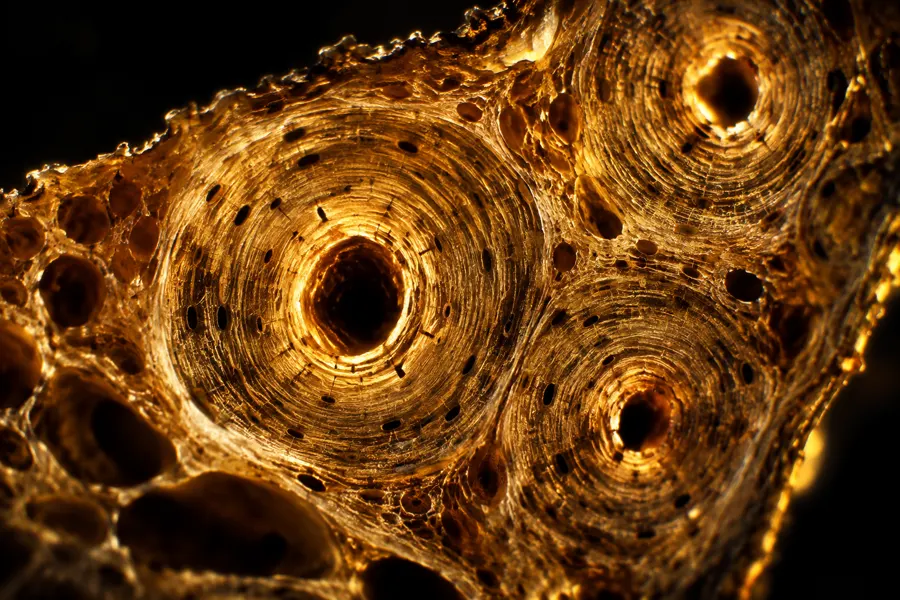
Bone remodeling is the lifelong cycle where cells called osteoclasts remove old bone and osteoblasts build new bone…

Paralytic osteoporosis is bone loss that happens after paralysis or spinal cord injury, when muscles can no longer…

Immobility and bone loss happens when a lack of movement—like prolonged bed rest—causes bones to weaken and lose…
Education only, not medical advice. Decisions about tests, medications and treatment belong with your own doctor. OsteoStrong does not diagnose, treat or cure any disease.